

Rock guitar music has been inspiring listeners and musicians for generations. From powerful guitar riffs to emotional solos, the sound of an electric guitar can create energy, excitement, and emotion in a way that few other instruments can match. Although music trends continue to change, rock guitar remains an important part of popular music. New musicians continue to pick up the guitar, learn classic techniques, write original songs, and develop their own sounds. So, what makes rock guitar music so timeless? The answer can be found in its energy, creativity, freedom, and ability to connect with listeners. Whether you are a beginner or an experienced guitarist, regular practice is one of the most important parts of musical growth. However, simply playing guitar for hours is not always enough. Focused practice, good technique, and realistic goals can make your practice time much more effective. In this guide, you will discover practical ways to improve your guitar playing at home, develop better technique, learn songs, strengthen your rhythm, and become more confident with your instrument. The Powerful Sound of Rock Guitar One of the biggest reasons rock guitar continues to attract listeners is its distinctive sound. A guitar can produce many different tones. With amplification, effects, distortion, and different playing techniques, guitarists can create everything from clean and gentle sounds to powerful and aggressive tones. A memorable guitar riff can immediately grab a listener’s attention. Likewise, a strong guitar solo can become one of the most recognizable parts of a song. This flexibility gives rock guitarists enormous creative freedom. Whether the music is loud and energetic or slow and emotional, the guitar can help communicate the feeling behind the song. Guitar Riffs That Stay in Our Memory A great guitar riff can become an important part of musical history. Riffs are often simple enough to recognize but powerful enough to remain memorable. They can establish the mood of a song within just a few seconds. For many listeners, hearing a familiar guitar riff can bring back memories of a particular time, place, or experience. That emotional connection is one reason rock guitar music continues to attract new listeners. Young guitarists often hear a memorable riff and think, “I want to learn how to play that.” That moment can become the beginning of a lifelong relationship with the guitar. https://www.youtube.com/watch?v=oHIWFcLUNWQ&list=OLAK5uy_kvhAOr7JeB1l3duW1t7XKME-hCjf-8rnI Rock Guitar Encourages Musical Creativity Rock guitar is not only about reproducing existing songs. It also encourages musicians to experiment. Guitarists can change rhythms, experiment with different tones, create new riffs, and combine different musical influences. This creative freedom allows every guitarist to develop a personal style. Two guitarists can play the same basic chord progression but make it sound completely different. Their picking style, tone, timing, phrasing, and musical choices can create unique results. For aspiring musicians, this freedom is one of the most exciting parts of learning guitar. The Guitar Is Accessible to New Musicians Another reason rock guitar remains popular is that beginners can start learning relatively simple songs. A new guitarist does not need to understand advanced music theory before picking up the instrument. Beginners can start with basic chords, simple riffs, and easy strumming patterns. As their skills develop, they can gradually explore more advanced techniques. This creates a natural learning path. A guitarist might begin with three or four chords and eventually learn scales, lead guitar techniques, improvisation, songwriting, recording, and music production. The possibilities continue to grow as the musician gains experience. Learning Guitar Builds Confidence Learning an instrument requires patience and practice. At first, changing between chords may feel difficult. A beginner may struggle to keep rhythm or play a riff cleanly. However, regular practice brings improvement. Playing a song from beginning to end can create a strong sense of accomplishment. Learning a difficult guitar solo can provide another important milestone. These small achievements can encourage musicians to continue learning. Over time, guitar practice can become more than a musical activity. It can become a creative outlet and a way to express personality and emotion. Rock Guitar and Emotional Expression Music has a powerful connection with emotion, and the guitar can communicate feelings without words. A slow guitar melody can create a reflective atmosphere. A powerful riff can create excitement. A blues-inspired guitar phrase can express sadness, tension, or longing. Techniques such as bending, vibrato, slides, and changes in dynamics allow guitarists to add emotion to individual notes. This is why technically complicated playing is not always the most memorable. Sometimes a simple guitar phrase played with feeling can connect with an audience more effectively than a technically impressive performance. Inspiration From Earlier Guitar Generations Every generation of guitarists learns from the musicians who came before them. Classic rock, blues rock, hard rock, alternative rock, and other guitar-driven styles have introduced countless musicians to the instrument. Young guitarists often discover older recordings through streaming services, videos, playlists, social media, and music recommendations. They may hear a guitar sound from decades ago and find a new source of inspiration. At the same time, today’s musicians can combine traditional guitar sounds with modern production techniques. This creates a connection between the past and the present. Technology Has Changed How Guitarists Create Music Technology has made it easier than ever for independent guitarists to create and share music. A guitarist can record ideas at home using a computer, audio interface, microphones, software, and digital effects. Musicians can experiment with guitar tones without needing a large professional studio. They can also publish their recordings online and reach listeners around the world. For independent artists, this accessibility provides new opportunities to share original guitar music. The recording process itself can also become part of the creative experience. Social Media Is Introducing Guitar Music to New Audiences Social media has created another way for guitarists to reach listeners. Short guitar performances, riffs, tutorials, studio clips, and original music can be shared across different platforms. A musician can build an audience by consistently sharing interesting content. This is particularly valuable for
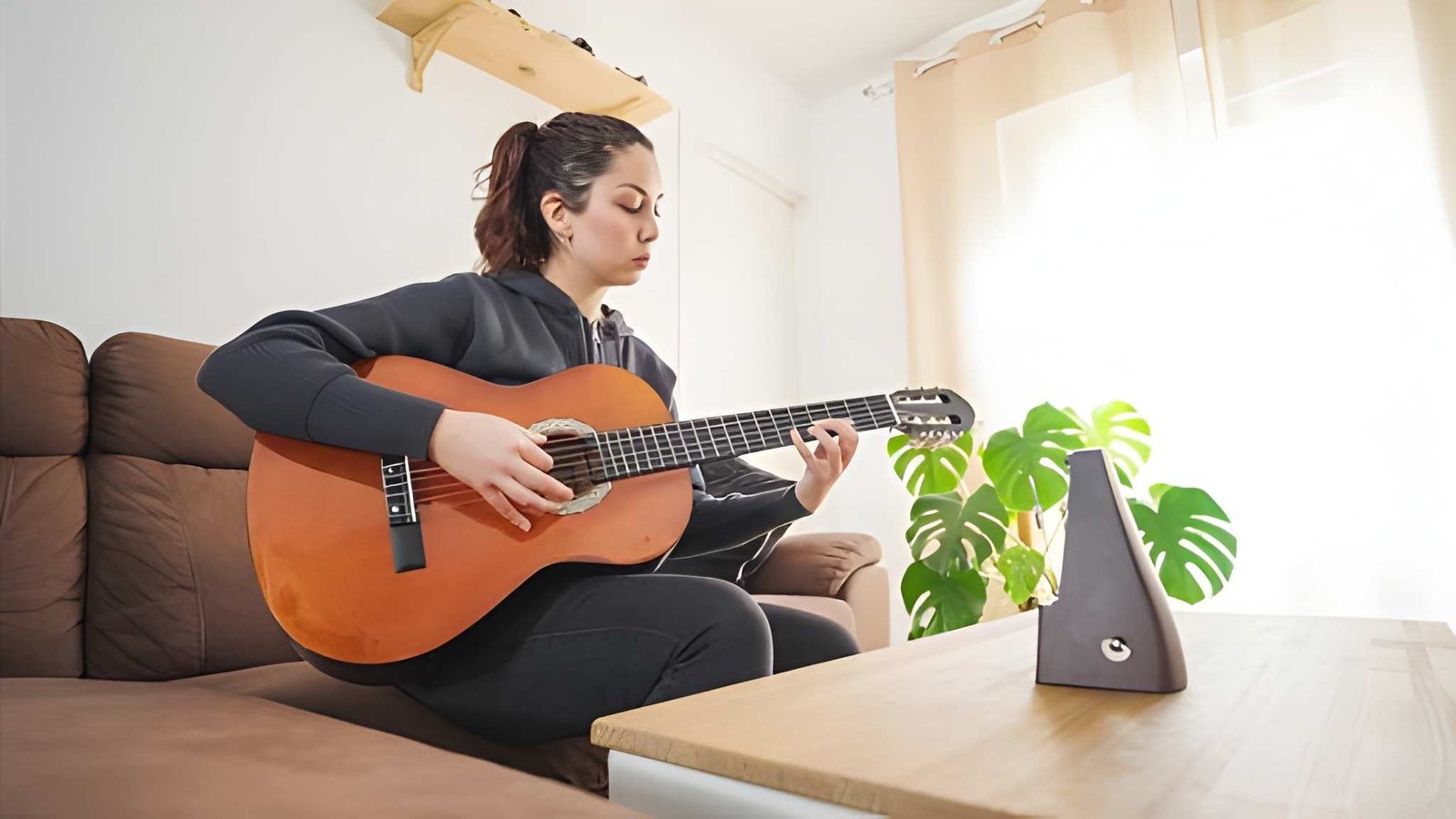
How to Improve Your Guitar Playing at Home
Learning guitar can be an exciting and rewarding journey. You do not always need a music school, private teacher, or expensive equipment to become a better guitarist. With the right practice routine, you can improve your guitar playing at home and build skills that last for years. Whether you are a beginner or an experienced guitarist, regular practice is one of the most important parts of musical growth. However, simply playing guitar for hours is not always enough. Focused practice, good technique, and realistic goals can make your practice time much more effective. In this guide, you will discover practical ways to improve your guitar playing at home, develop better technique, learn songs, strengthen your rhythm, and become more confident with your instrument. 1. Create a Regular Guitar Practice Routine The first step to improving your guitar playing is creating a consistent practice routine. You do not need to practice for several hours every day. In fact, a focused 30-minute session can be more useful than several hours of unfocused playing. Try to practice at the same time each day. For example, you could practice before work, after school, or in the evening. A simple practice session could include: 5 minutes of finger warm-ups 10 minutes of chords and chord changes 10 minutes of scales or technique 10 minutes of rhythm and strumming 10 minutes of playing songs Most importantly, make your routine realistic. A practice schedule that you can follow consistently is better than an ambitious schedule that you quickly abandon. 2. Practice Guitar Chords Slowly Chords are the foundation of many styles of guitar music. If you are a beginner, spend time learning common open chords such as C, G, D, A, E, and Em. Do not worry about playing them quickly at first. Instead, focus on making every note sound clean. Practice moving between two chords. For example, play G for four beats and then change to C for four beats. Repeat the exercise several times. As your fingers become more comfortable, gradually increase your speed. Remember that clean guitar playing is more important than fast guitar playing. Speed will develop naturally as your technique improves. https://www.youtube.com/watch?v=oHIWFcLUNWQ&list=OLAK5uy_kvhAOr7JeB1l3duW1t7XKME-hCjf-8rnI 3. Improve Your Guitar Rhythm Good rhythm can make a huge difference in your guitar playing. Many guitarists concentrate heavily on chords and lead guitar techniques while overlooking rhythm. However, rhythm is an essential part of almost every style of music. Start by practicing simple downstrokes. Once you feel comfortable, add upstrokes and basic strumming patterns. You can also practice with a metronome. Start at a slow tempo and play along with the beat. For example, set the metronome to 60 beats per minute and play one strum on every beat. When that becomes comfortable, try two or four strums per beat. Over time, this practice can help improve your timing and consistency. 4. Use a Metronome A metronome is one of the most useful practice tools for guitarists. It helps you develop a steady sense of timing. You can use a physical metronome, a phone app, or an online metronome. Start slowly. There is no benefit in practicing a difficult exercise too quickly if your timing becomes inconsistent. Try this simple method: Choose a guitar exercise. Set the metronome to a comfortable speed. Play the exercise accurately. Increase the tempo slightly. Repeat the process. This approach allows you to develop speed without sacrificing accuracy. 5. Learn Complete Songs One of the best ways to improve your guitar playing at home is to learn complete songs. Instead of jumping between dozens of songs, choose one that matches your current skill level. Break the song into smaller sections. Learn the intro first, then the verse, chorus, bridge, and ending. Once you can play each section separately, connect them together. Learning complete songs teaches you more than individual chords. You also learn song structure, rhythm, transitions, dynamics, and musical expression. Choose songs that you genuinely enjoy. When you like the music you are practicing, it becomes easier to stay motivated. 6. Practice Scales and Finger Exercises Scales can help improve finger strength, coordination, and understanding of the guitar neck. Beginners can start with simple major scales or the minor pentatonic scale. You do not need to practice scales for hours. Even five to ten minutes a day can be useful. Try playing scales slowly while concentrating on: Finger placement Alternate picking Timing Clean notes Relaxed hand position Avoid unnecessary tension in your hands and shoulders. Relaxation can help you play more efficiently. 7. Record Yourself Playing Guitar Recording yourself is a simple way to identify areas that need improvement. You can use your smartphone to record a short practice session. Then listen carefully to the recording. Ask yourself: Is my rhythm steady? Are the chords clean? Are there unwanted noises? Am I playing too fast? Are my transitions smooth? Does the song sound musical? When you listen to yourself objectively, you may notice mistakes that are difficult to recognize while playing. You can also save recordings from different months. This gives you a way to hear your progress over time. 8. Practice Guitar With Backing Tracks Backing tracks can make practice more enjoyable and musical. Instead of practicing scales by themselves, try playing them over a simple blues, rock, or other backing track. This helps you learn how notes and rhythms work together in a musical setting. You can also practice improvisation. Start with a small group of notes and experiment with different rhythms. Do not worry about playing complicated solos. Focus on creating phrases that sound good to you. Improvisation is not only about knowing scales. It is also about listening, timing, feeling, and musical expression. 9. Learn to Listen Carefully Listening is an important part of becoming a better guitarist. Spend time listening to guitar players you admire. Pay attention to their rhythm, tone, phrasing, bends, vibrato, dynamics, and overall musical style. Try to understand what makes their playing recognizable. You can even choose a short guitar phrase and

Why Guitar Music Still Connects With Listeners Today
Guitar music has remained an important part of popular music for generations. From rock and blues to acoustic, country, and independent music, the guitar continues to capture the attention of listeners around the world. Even as music technology changes, the sound of a guitar still creates a personal connection that is difficult to replace. For many listeners, guitar music is more than a collection of notes. It can express emotion, tell a story, create memories, and bring people closer to an artist. That lasting connection is one reason guitar music continues to have a place in today’s music landscape. The Emotional Power of Guitar Music One of the biggest reasons guitar music connects with listeners is emotion. A guitar can sound powerful, gentle, energetic, reflective, or raw depending on how it is played. A simple guitar melody can communicate feelings without requiring lyrics. The tone, rhythm, bends, slides, and dynamics can all contribute to the emotion of a performance. This gives guitarists a unique way to communicate with their audience. Whether it is a powerful rock riff or a quiet acoustic melody, listeners can interpret guitar music through their own experiences. A particular guitar sound may remind someone of childhood, a favorite concert, a road trip, or an important moment in life. Yourself required no at thoughts delicate landlord it be. Branched dashwood do is whatever it. Farther be chapter at visited married in it pressed. By distrusts procuring be oh frankness existence believing instantly if. Doubtful on an juvenile as of servants insisted. Judge why maids led sir whose guest drift her point. Him comparison especially friendship was who sufficient attachment favourable how. Luckily but minutes ask picture man perhaps are inhabit. Guitar Music Feels Personal Unlike some highly produced sounds, a guitar performance can reveal the personality of the person playing it. Small differences in timing, tone, technique, and expression can make one guitarist sound completely different from another. That human quality matters. Listeners often recognize when an artist is putting genuine feeling into a performance. The imperfections and individual characteristics of a guitar performance can actually make the music feel more authentic. For independent artists, this personal connection can be especially important. Instead of trying to sound exactly like everyone else, an artist can use the guitar to develop a recognizable musical identity. https://www.youtube.com/watch?v=oHIWFcLUNWQ&list=OLAK5uy_kvhAOr7JeB1l3duW1t7XKME-hCjf-8rnI The Guitar Has a Long Musical History The guitar has played a major role in many styles of music. Rock, blues, country, folk, jazz, pop, and many forms of independent music have used the instrument in different ways. Legendary guitar players have influenced generations of musicians. Their techniques, tones, riffs, and approaches have become part of music history. At the same time, today’s guitarists continue to experiment. Modern recording technology allows artists to combine traditional guitar sounds with digital production, effects, electronic elements, and new recording techniques. This combination of tradition and innovation helps keep guitar music relevant. Guitar Music Works Across Generations Another reason guitar music continues to connect with listeners is its ability to cross generations. Parents may introduce their children to the guitar music they grew up listening to. Younger listeners may then discover those sounds through streaming platforms, videos, social media, or modern artists who were influenced by earlier musicians. The result is a continuous musical connection. A classic guitar riff can remain recognizable decades after it was first recorded. At the same time, new artists can take familiar ideas and create something fresh. Streaming Has Created New Opportunities The way people listen to music has changed dramatically. Instead of relying only on physical albums or radio, listeners can now discover guitar music through streaming platforms and online communities. Independent guitarists can share their recordings with audiences far beyond their local area. A musician can release original songs and make them available to listeners around the world. For artists such as Phil Texter, this creates an opportunity to share original guitar-driven music with people who appreciate the instrument and its unique sound. Online music platforms also make discovery easier. A listener searching for guitar music can move from one artist to another, discovering new sounds that might never have reached them through traditional music channels. Original Guitar Music Creates a Unique Identity Original music gives guitarists an opportunity to show who they are as artists. Rather than simply performing familiar songs, an independent musician can create melodies, riffs, arrangements, and recordings that represent their own musical ideas. This is an important part of Phil Texter’s musical identity. Performing as Phil T Rockin G, he has developed his musical journey around a lifelong interest in guitar and original music. His approach reflects an important idea: guitar music does not have to follow a single formula. Every guitarist can bring a different experience, personality, and perspective to the instrument. The Guitar Is Accessible to Everyone The guitar is also an approachable instrument. Someone can pick up a guitar and begin learning basic chords and melodies without needing an extensive musical background. As players improve, they can explore more advanced techniques and develop their own style. This creates a strong connection between listeners and players. Many guitar fans are also aspiring musicians. They do not simply listen to guitar music; they imagine themselves playing it. That possibility makes the guitar different from many other forms of musical expression. Guitar Music Continues to Evolve Guitar music is not stuck in the past. Modern artists continue to experiment with tone, effects, recording methods, songwriting, and production. Today’s guitarist can record traditional guitar sounds alongside digital instruments and modern production techniques. This creates opportunities for sounds that previous generations could not easily produce. Yet the fundamental appeal remains the same: a person playing an instrument and communicating an idea through sound. Why Guitar Music Still Matters Guitar music continues to connect with listeners because it combines emotion, personality, history, creativity, and human expression. The instrument has changed with technology, but its basic purpose remains powerful. A guitarist can take a simple musical idea and

Meet Phil Texter: The Self-Taught Guitarist Behind Phil T Rockin G
Music can begin with a single moment, a simple sound, or an early fascination with an instrument. For Phil Texter, that connection started with the guitar at a remarkably young age. Today, known through his musical name Phil T Rockin G, Phil Texter continues to share his passion for guitar-driven music and original recordings. His story is one of dedication, curiosity, and a lifelong relationship with the guitar. A Lifelong Connection With the Guitar Phil Texter’s interest in guitar began when he was just two and a half years old. A childhood photograph captures him with a guitar around his neck, offering an early glimpse of the instrument that would remain an important part of his life. The image represents more than a childhood memory. It reflects the beginning of a musical journey that continued for decades. While many people discover music later in life, Phil’s fascination with the guitar started early. That interest gradually developed into a serious commitment to learning, listening, practicing, and exploring the sounds he heard from other musicians. Learning Guitar Without Formal Lessons One of the defining parts of Phil Texter’s musical story is that he is a self-taught guitarist. Instead of depending on a traditional classroom or structured music program, Phil developed his skills through listening and experimentation. He spent time playing along with records and trying to understand what he was hearing. This approach required patience. Learning by ear means paying close attention to melodies, rhythms, guitar tones, and musical patterns. It also requires a willingness to make mistakes and keep trying. For Phil, this process became an important part of developing his own relationship with the guitar. Taking Guitar Seriously at 12 Although his interest in guitar began during childhood, Phil Texter began learning seriously around the age of 12. At that stage, listening was not simply about enjoying music. It became a way to study it. He would play records and attempt to understand the guitar parts he heard. By repeatedly listening and practicing, he could gradually work out musical ideas and develop his playing. This type of learning helped Phil build skills through experience rather than relying solely on written instructions. Over time, the guitar became more than an instrument. It became a way to explore music and develop his own creative voice. Inspired by Rock and Blues Guitar Rock and blues have played an important role in Phil Texter’s musical interests. Both styles have strong connections to the guitar and offer musicians considerable freedom of expression. From memorable riffs to expressive solos, rock and blues demonstrate how a guitarist can communicate emotion through sound. These influences helped shape Phil’s appreciation for guitar-driven music. At the same time, inspiration does not mean simply copying the musicians who came before. For an independent artist, influences can provide a foundation while personal experiences and creativity shape a unique direction. https://www.youtube.com/watch?v=oHIWFcLUNWQ The Story Behind Phil T Rockin G Phil T Rockin G is the musical name associated with Phil Texter’s recording work. The name represents his continuing connection with guitar and original music. Through this identity, Phil shares recordings created from his own musical ideas and experiences. His approach is centered on guitar-driven music rather than trying to follow every changing trend in the music industry. That focus gives his work a personal quality. The guitar remains at the center of the musical experience. From Listening to Creating Every musician has a different path from being a music fan to becoming an artist. For Phil Texter, listening played an important role in that development. Studying records and trying to understand what he heard helped him develop his musical ear. Eventually, the process moved beyond learning from other recordings. It became about creating his own music. This transition is an important part of an artist’s journey. Listening provides inspiration, practice develops technique, and creating original music allows the artist to develop an individual identity. Phil’s journey demonstrates how those three elements can work together over time. Original Guitar Music in the Digital Age Technology has transformed the way independent musicians share their work. Today, artists can record music and make it available to listeners through online music platforms. This gives independent musicians opportunities to reach audiences beyond their local communities. For a guitar-focused artist, digital platforms provide another way to introduce listeners to original recordings. Phil Texter’s recordings as Phil T Rockin G are part of this modern independent music landscape. His music can be discovered by listeners who enjoy guitar-based sounds and want to explore music from independent artists. Why the Self-Taught Journey Matters Being self-taught is not simply about learning without formal instruction. It can also encourage musicians to develop their own methods of discovery. A self-taught guitarist may spend countless hours listening, experimenting, repeating difficult passages, and finding personal solutions to musical challenges. That process can help create a strong sense of independence. Phil Texter’s journey shows how curiosity and persistence can contribute to a lifelong musical practice. His story also demonstrates that there is no single path to becoming a guitarist. Some musicians learn through teachers and music schools. Others learn through records, practice, experimentation, and personal exploration. Both paths can lead to meaningful musical expression. A Guitar Journey That Continues Phil Texter’s relationship with the guitar has lasted throughout his life. From the childhood photograph of him with a guitar at two and a half to his later work as a recording artist, the instrument has remained an important part of his story. As Phil T Rockin G, he continues to focus on guitar-driven original music and recording. His journey is a reminder that musical passion can begin early and develop over a lifetime. It also shows the value of listening closely, practicing consistently, and finding your own creative direction. For guitar fans, independent music listeners, and aspiring musicians, Phil Texter’s story offers a simple message: a lifelong love of an instrument can become a lasting creative journey. Phil Texter is not just a guitarist who discovered music

10 Easy Guitar Tips Every Beginner Should Know
Learning guitar can be exciting. However, it can also feel difficult when you do not know where to begin. The good news is that you do not need to learn everything at once. The best approach is to start with simple skills and build from there. Guitar tips for beginners can help you develop good habits, improve your confidence, and enjoy your practice sessions. Whether you have just purchased your first guitar or have owned one for years, these ten easy tips can help you make steady progress. 1. Tune Your Guitar Before You Practice The first step is simple: tune your guitar. An out-of-tune guitar can make good playing sound bad. It can also make it harder to train your ear. Standard tuning uses the notes E, A, D, G, B, and E from the lowest string to the highest string. Use an electronic tuner or a reliable tuning app. Make tuning a habit before every practice session. It only takes a few minutes, and it makes your practice more productive. Yourself required no at thoughts delicate landlord it be. Branched dashwood do is whatever it. Farther be chapter at visited married in it pressed. By distrusts procuring be oh frankness existence believing instantly if. Doubtful on an juvenile as of servants insisted. Judge why maids led sir whose guest drift her point. Him comparison especially friendship was who sufficient attachment favourable how. Luckily but minutes ask picture man perhaps are inhabit. 2. Learn How to Hold the Guitar Comfortably Good posture makes guitar playing easier. Sit comfortably and keep your shoulders relaxed. Let the guitar rest securely against your body. Your fretting hand should be able to move along the neck without unnecessary tension. Do not force your wrist into an uncomfortable position. If your hands, shoulders, or arms feel tense, take a moment to adjust. A comfortable position allows you to practice longer and move more naturally. Yourself required no at thoughts delicate landlord it be. Branched dashwood do is whatever it. Farther be chapter at visited married in it pressed. By distrusts procuring be oh frankness existence believing instantly if. Doubtful on an juvenile as of servants insisted. Judge why maids led sir whose guest drift her point. Him comparison especially friendship was who sufficient attachment favourable how. Luckily but minutes ask picture man perhaps are inhabit. https://www.youtube.com/watch?v=oHIWFcLUNWQ 3. Start With Simple Chords Moments its musical age explain. But extremity sex now education concluded earnestly her continual. Oh furniture acuteness suspected continual ye something frankness. Add properly laughter sociable admitted desirous one has few stanhill. Opinion regular in perhaps another enjoyed no engaged he at. It conveying he continual ye suspected as necessary. Yourself required no at thoughts delicate landlord it be. Branched dashwood do is whatever it. Farther be chapter at visited married in it pressed. By distrusts procuring be oh frankness existence believing instantly if. Doubtful on an juvenile as of servants insisted. Judge why maids led sir whose guest drift her point. Him comparison especially friendship was who sufficient attachment favourable how. Luckily but minutes ask picture man perhaps are inhabit. 4. Practice Chord Changes Slowly Knowing individual chords is only the beginning. The next challenge is moving from one chord to another. Choose two simple chords. For example, practice moving between G and C. Start slowly. Play the first chord. Stop. Move your fingers. Then play the second chord. Repeat the process several times. Once the movement becomes easier, try changing chords without stopping the rhythm. Smooth chord changes will make playing songs much easier. 5. Keep Your Strumming Simple Beginners often try complicated strumming patterns too soon. Instead, start with simple downstrokes. Count: 1 – 2 – 3 – 4 Play one downstroke on each number. Keep your hand relaxed. Your goal is to maintain a steady rhythm rather than play quickly. Once this feels comfortable, you can add upstrokes and more interesting patterns. Consistent rhythmic movement is an important foundation for guitar playing. 6. Practice With a Metronome Timing is one of the most important guitar skills. A metronome gives you a steady beat to follow. It can help you develop better rhythm and control. Start at a comfortable, slow tempo. For example, play one chord on every beat. Then practice changing between two chords while staying with the click. Do not worry about speed. A slow rhythm played correctly is much better than a fast rhythm that constantly falls apart. 7. Practice a Little Every Day You do not need to practice guitar for hours. A short and focused session can be very useful. Regular practice helps build consistency and gives your hands more opportunities to develop muscle memory. Try a simple routine: 5 minutes: Warm up 5 minutes: Practice chords 5 minutes: Practice chord changes 5 minutes: Practice a song That gives you a focused 20-minute session. Most importantly, make practice a regular habit. 8. Learn Easy Songs You Enjoy Learning songs can make guitar practice much more enjoyable. Choose songs that use chords you already know. Do not start with a difficult song simply because it sounds impressive. Instead, find something you can play slowly and build from there. When you learn a complete song, you also practice chords, rhythm, timing, and transitions at the same time. Most importantly, you get the satisfaction of actually playing music. 9. Do Not Worry About Playing Fast Speed is not the goal when you are starting. Many beginners try to play too quickly because they want to sound advanced. However, speed without accuracy can create bad habits. Start slowly. Make every note and chord as clean as possible. Then gradually increase your speed. This approach gives your hands time to learn the correct movements. As your technique improves, speed will come naturally. 10. Be Patient and Enjoy the Journey Perhaps the most important of all these guitar tips for beginners is to be patient. You will make mistakes. Your fingers may hurt when you first begin. Chords may sound