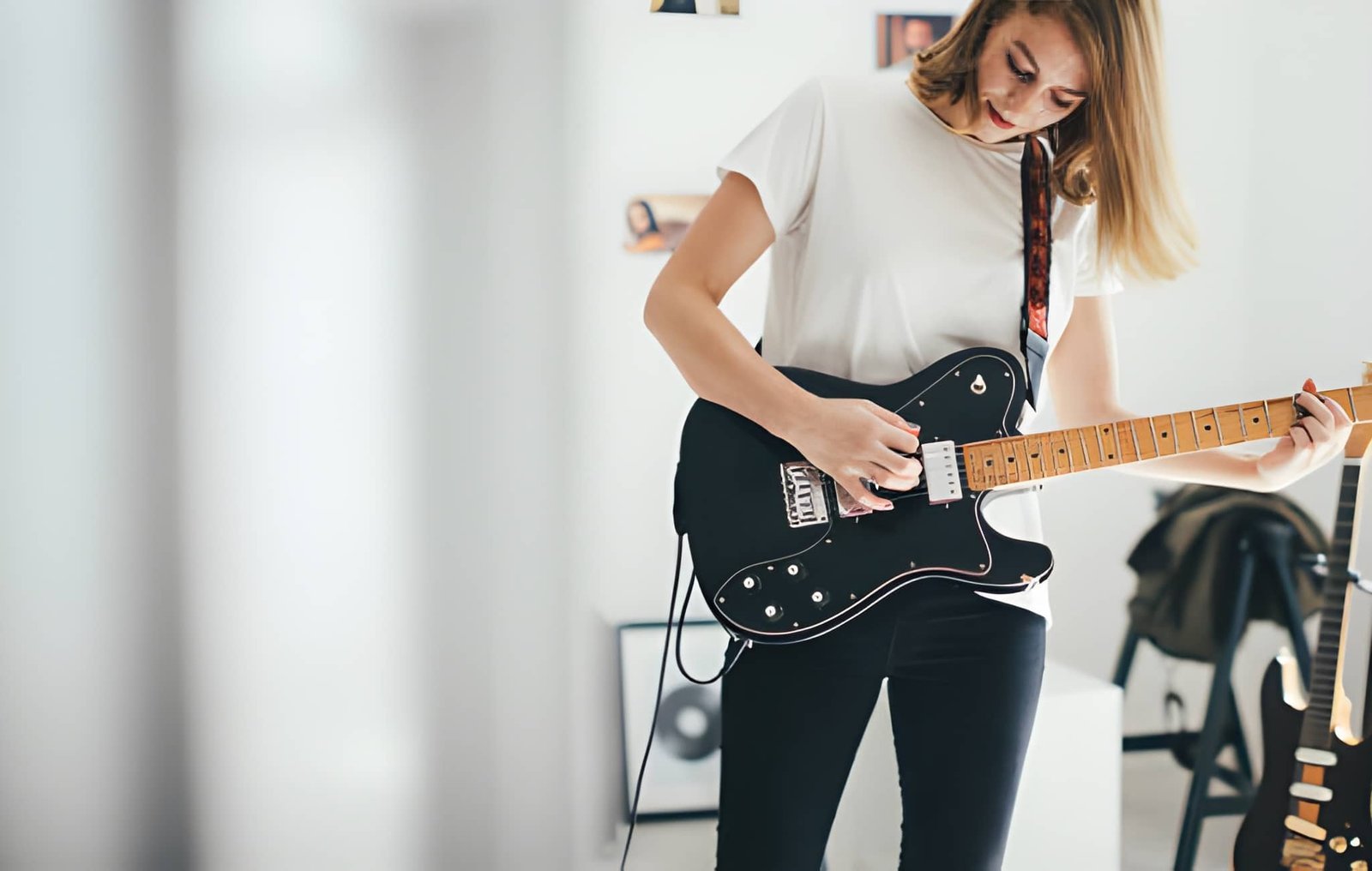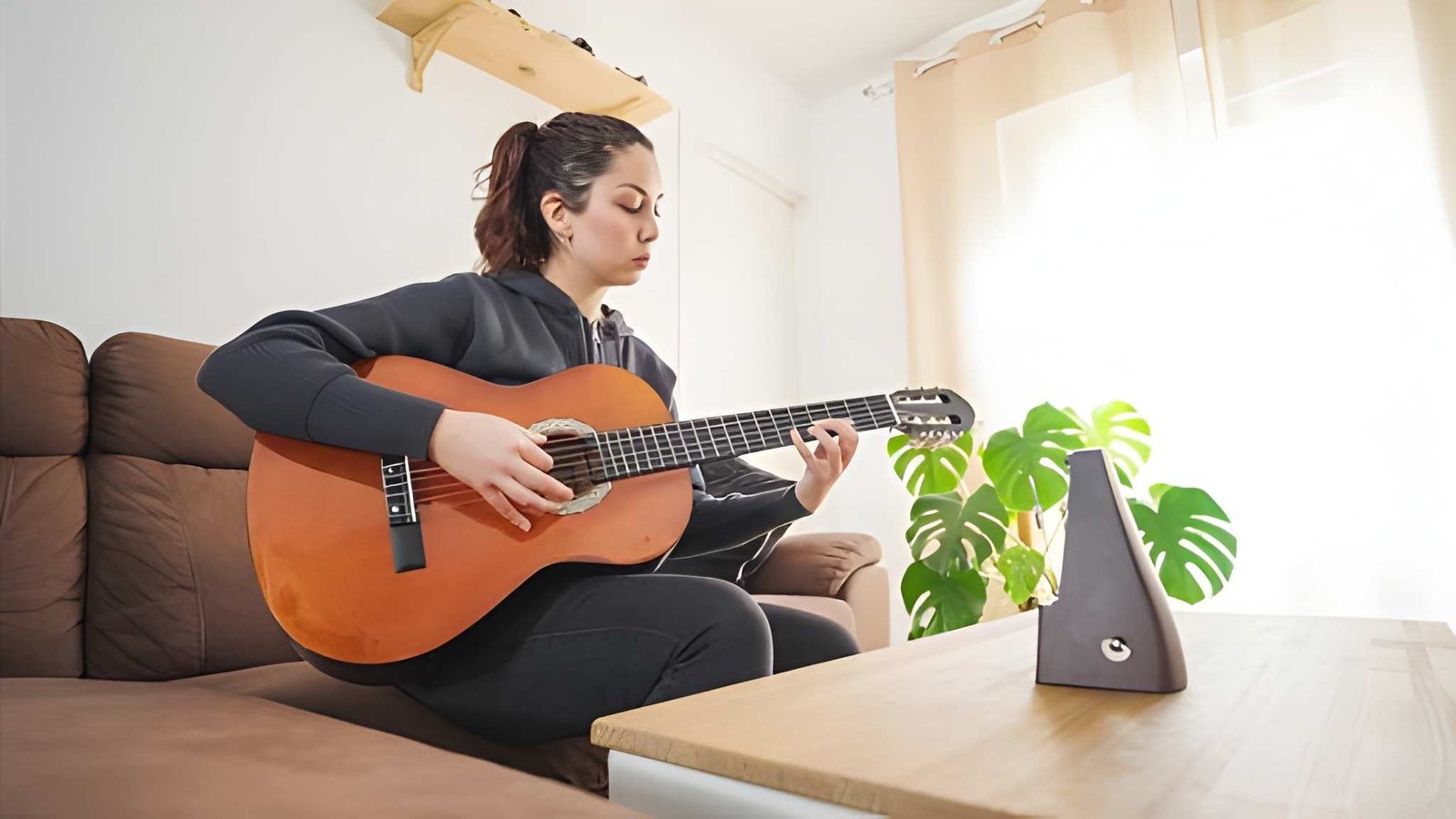
Learning guitar can be an exciting and rewarding journey. You do not always need a music school, private teacher, or expensive equipment to become a better guitarist. With the right practice routine, you can improve your guitar playing at home and build skills that last for years.
Whether you are a beginner or an experienced guitarist, regular practice is one of the most important parts of musical growth. However, simply playing guitar for hours is not always enough. Focused practice, good technique, and realistic goals can make your practice time much more effective.
In this guide, you will discover practical ways to improve your guitar playing at home, develop better technique, learn songs, strengthen your rhythm, and become more confident with your instrument.
1. Create a Regular Guitar Practice Routine
The first step to improving your guitar playing is creating a consistent practice routine.
You do not need to practice for several hours every day. In fact, a focused 30-minute session can be more useful than several hours of unfocused playing.
Try to practice at the same time each day. For example, you could practice before work, after school, or in the evening.
A simple practice session could include:
- 5 minutes of finger warm-ups
- 10 minutes of chords and chord changes
- 10 minutes of scales or technique
- 10 minutes of rhythm and strumming
- 10 minutes of playing songs
Most importantly, make your routine realistic. A practice schedule that you can follow consistently is better than an ambitious schedule that you quickly abandon.
2. Practice Guitar Chords Slowly
Chords are the foundation of many styles of guitar music. If you are a beginner, spend time learning common open chords such as C, G, D, A, E, and Em.
Do not worry about playing them quickly at first. Instead, focus on making every note sound clean.
Practice moving between two chords. For example, play G for four beats and then change to C for four beats. Repeat the exercise several times.
As your fingers become more comfortable, gradually increase your speed.
Remember that clean guitar playing is more important than fast guitar playing. Speed will develop naturally as your technique improves.
3. Improve Your Guitar Rhythm
Good rhythm can make a huge difference in your guitar playing.
Many guitarists concentrate heavily on chords and lead guitar techniques while overlooking rhythm. However, rhythm is an essential part of almost every style of music.
Start by practicing simple downstrokes. Once you feel comfortable, add upstrokes and basic strumming patterns.
You can also practice with a metronome. Start at a slow tempo and play along with the beat.
For example, set the metronome to 60 beats per minute and play one strum on every beat. When that becomes comfortable, try two or four strums per beat.
Over time, this practice can help improve your timing and consistency.
4. Use a Metronome
A metronome is one of the most useful practice tools for guitarists.
It helps you develop a steady sense of timing. You can use a physical metronome, a phone app, or an online metronome.
Start slowly. There is no benefit in practicing a difficult exercise too quickly if your timing becomes inconsistent.
Try this simple method:
- Choose a guitar exercise.
- Set the metronome to a comfortable speed.
- Play the exercise accurately.
- Increase the tempo slightly.
- Repeat the process.
This approach allows you to develop speed without sacrificing accuracy.
5. Learn Complete Songs
One of the best ways to improve your guitar playing at home is to learn complete songs.
Instead of jumping between dozens of songs, choose one that matches your current skill level.
Break the song into smaller sections. Learn the intro first, then the verse, chorus, bridge, and ending.
Once you can play each section separately, connect them together.
Learning complete songs teaches you more than individual chords. You also learn song structure, rhythm, transitions, dynamics, and musical expression.
Choose songs that you genuinely enjoy. When you like the music you are practicing, it becomes easier to stay motivated.
6. Practice Scales and Finger Exercises
Scales can help improve finger strength, coordination, and understanding of the guitar neck.
Beginners can start with simple major scales or the minor pentatonic scale.
You do not need to practice scales for hours. Even five to ten minutes a day can be useful.
Try playing scales slowly while concentrating on:
- Finger placement
- Alternate picking
- Timing
- Clean notes
- Relaxed hand position
Avoid unnecessary tension in your hands and shoulders. Relaxation can help you play more efficiently.
7. Record Yourself Playing Guitar
Recording yourself is a simple way to identify areas that need improvement.
You can use your smartphone to record a short practice session. Then listen carefully to the recording.
Ask yourself:
- Is my rhythm steady?
- Are the chords clean?
- Are there unwanted noises?
- Am I playing too fast?
- Are my transitions smooth?
- Does the song sound musical?
When you listen to yourself objectively, you may notice mistakes that are difficult to recognize while playing.
You can also save recordings from different months. This gives you a way to hear your progress over time.
8. Practice Guitar With Backing Tracks
Backing tracks can make practice more enjoyable and musical.
Instead of practicing scales by themselves, try playing them over a simple blues, rock, or other backing track.
This helps you learn how notes and rhythms work together in a musical setting.
You can also practice improvisation. Start with a small group of notes and experiment with different rhythms.
Do not worry about playing complicated solos. Focus on creating phrases that sound good to you.
Improvisation is not only about knowing scales. It is also about listening, timing, feeling, and musical expression.
9. Learn to Listen Carefully
Listening is an important part of becoming a better guitarist.
Spend time listening to guitar players you admire. Pay attention to their rhythm, tone, phrasing, bends, vibrato, dynamics, and overall musical style.
Try to understand what makes their playing recognizable.
You can even choose a short guitar phrase and learn it by ear. This develops your ability to recognize notes and musical patterns.
Listening can also inspire new ideas for your own playing.
For guitarists who love original music, careful listening can become an important part of developing a personal sound.
10. Improve Your Guitar Technique
Good technique makes guitar playing easier and more comfortable.
Pay attention to how you hold the guitar and pick. Keep your fretting hand relaxed and avoid squeezing the neck harder than necessary.
Practice changing chords without unnecessary finger movement.
For lead guitar, work on techniques such as:
- Alternate picking
- Hammer-ons
- Pull-offs
- Slides
- Bends
- Vibrato
- String muting
Learn each technique slowly before trying to use it at high speed.
Quality should always come before speed.
11. Set Small Guitar Goals
Large goals can sometimes feel overwhelming. Instead, create smaller goals that you can achieve each week.
For example, your goal might be:
“Learn three new chords this week.”
Another goal could be:
“Play one complete song without stopping.”
You might also set a goal to practice guitar for 20 minutes every day.
Small achievements create momentum. As you reach one goal, create another.
This approach can make your guitar practice more enjoyable and help you stay consistent.
12. Make Guitar Practice Enjoyable
Practice should not feel like a chore every day.
Give yourself time to simply play. Experiment with sounds, melodies, chords, and rhythms.
If you normally practice rock guitar, try a blues progression. If you usually play chords, experiment with a simple melody.
You can also revisit songs you learned years ago. Sometimes you will discover that your improved technique allows you to play them in a completely different way.
Most importantly, remember why you started playing guitar in the first place.
Music should be enjoyable.
13. Be Patient With Your Progress
Improving your guitar playing takes time.
Some days you may feel that you are improving quickly. Other days, your playing may feel difficult or frustrating. This is completely normal.
Do not compare your progress with another guitarist.
Instead, compare your current playing with where you were a month or six months ago.
Consistent practice creates gradual improvement. Even a short practice session can be valuable when you approach it with focus.
Final Thoughts
Learning how to improve your guitar playing at home does not require expensive equipment or complicated lessons. What you need most is a guitar, a practical practice routine, patience, and a willingness to keep learning.
Practice your chords, improve your rhythm, use a metronome, learn complete songs, record yourself, explore backing tracks, and listen carefully to music. Most importantly, make time to enjoy playing.
Every guitarist develops at a different pace. The goal is not to become perfect overnight. The goal is to become a little better with every practice session.
If you love guitar music, keep picking up your guitar and keep exploring your own sound. With consistent effort, your playing can continue to grow.
Discover Original Guitar Music
If you enjoy guitar-driven music, explore the original recordings of Phil Texter, performing as Phil T Rockin G. His music reflects a lifelong love of guitar, songwriting, recording, and original instrumental ideas.
Visit Phil Texter online to discover more about his music, guitar journey, and recordings.